Hong Kong is a place where a bowl of wonton noodles can cost less than a subway ride in NYC, but a 500-square-foot flat in Mid-Levels can run you more than a mortgage back home. For decades, Hong Kong has topped global rankings as one of the most expensive cities on the planet, and most of that reputation comes down to one line item: housing. Strip that out, though, daily life here can be surprisingly, almost delightfully, affordable.
This guide breaks down exactly what you'll pay for housing, food, transport, utilities, healthcare, and taxes in Hong Kong, with real numbers and insider tips from people who've actually lived here.
[ms-toc]
TLDR? The 30-Second Snapshot
If you only read one section, read this one.
- A single person living comfortably in Hong Kong (including rent) typically spends HK$20,000–HK$26,000 a month (roughly US$2,550–US$3,300).
- A couple can expect HK$24,500–HK$35,000 a month (about US$3,150–US$4,500).
- A family of four renting privately usually spends HK$49,000–HK$55,000 a month (around US$6,300–US$7,050), before international school fees.
- Housing is the single biggest expense, typically eating up 43–72% of your total budget depending on your lifestyle and neighborhood.
- Everyday costs — food, transport, and utilities — are genuinely cheap by global-city standards, especially if you eat local and use public transport.
- The average net monthly salary in Hong Kong is around HK$25,000–HK$36,700, and salaries tax tops out at a flat 15–17%, among the lowest in the developed world.
How Expensive Is Hong Kong, Really?
Here's the honest answer: it depends entirely on where you live and how you eat. Hong Kong consistently ranks among the top three most expensive cities in the world for international employees, largely because of sky-high property prices. But the city also runs one of the most efficient public transport systems anywhere, and a filling local meal can cost less than a specialty latte back home.
Below is a realistic monthly budget range by household type, combining rent, food, transport, utilities, and incidentals.
Note: these ranges reflect private rental housing at mid-market rates. Choosing a smaller flat, a less central district, or a shared apartment will bring these numbers down significantly — and choosing an international school for your kids will push the family figure up considerably.
Housing & Rent
Let's not bury the lede: rent is why Hong Kong has its reputation. It's common for housing to swallow 40–70% of a household's monthly budget, especially if you want to live somewhere central.
Average monthly rent (private housing):
A few things that surprise most newcomers:
- Square footage is tiny by American standards. The average Hong Kong apartment is around 470 square feet — smaller than many U.S. studio apartments. Budget-friendly doesn't always mean spacious.
- Neighborhood makes a massive difference. Mid-Levels and The Peak command premium rents for the view and prestige; Sai Ying Pun, Kennedy Town, and the MTR Island Line's western stretch offer more space for less, with just a slightly longer commute. Families often look toward Discovery Bay or Sai Kung for larger, greener living at a relative discount — with a ferry or bus commute as the trade-off.
- Two months' rent as deposit is standard, plus one month in advance, so budget three months' rent just to move in.
- Agent fees (often half a month's rent) and utility deposits add up fast — factor them into your relocation budget, not just your monthly one.
Use a licensed agent, always ask whether the quoted rent includes the "government rates" and management fee, and don't sign anything before checking the building's water tank and aircon condition in person — HK's summer humidity makes both non-negotiable.
Groceries & Eating Out
Food is where Hong Kong quietly redeems itself. You can eat extremely well on a modest budget if you're willing to skip Western supermarkets and imported goods.
What things actually cost:
- Cha chaan teng (local café) set meal: HK$50–HK$80
- McDonald's value meal: HK$30–HK$52
- Mid-range dinner for two: around HK$500
- Grocery run for one person, per month: HK$1,700–HK$4,000 depending on how much you cook at home versus buy imported brands
- Coffee (regular, local): HK$30–HK$40; imported Western brands run noticeably higher
Money-saving moves locals swear by:
- Shop at wet markets for produce, meat, and fish — prices are often 30–50% lower than supermarkets, and the quality is excellent once you know which stalls to trust.
- Use OpenRice before booking anywhere — it's the go-to app for real reviews, menus, and prices, and it'll save you from tourist-trap pricing near MTR exits.
- Lunch set menus (usually served 12–2:30pm on weekdays) are dramatically cheaper than ordering the same dishes à la carte at dinner.
- Skip the imported cereal aisle. A box of American breakfast cereal or imported cheese can cost two to three times what it does back home — local or Japanese/Korean alternatives are far kinder to your wallet.
Getting Around
This is genuinely one of the best financial surprises about moving here. Hong Kong's public transport is fast, spotless, and absurdly cheap compared to almost anywhere else in the developed world.
- MTR fares: typically HK$5–HK$15 per trip with an Octopus card (tap in, tap out — no need to calculate fares in advance)
- Monthly transport spend for a regular commuter: HK$500–HK$2,100
- Star Ferry (Central to Tsim Sha Tsui): HK$5–HK$6.50 for one of the world's most scenic harbour crossings
- Taxis: reasonable for short hops, roughly HK$24 flag-fall plus HK$1.9 per 200m — handy after a late MTR closing, but they add up fast if used daily
Do not buy a car. Between parking (which can run several thousand HK dollars a month in urban districts), insurance, and maintenance, private vehicle ownership in Hong Kong is one of the most reliably bad financial decisions an expat can make. The MTR's Island Line, Tsuen Wan Line, and the rest of the network reach almost everywhere you'd actually want to go — and if they don't, a minibus or taxi will finish the job for pocket change.
Load your Octopus card with auto-add-value linked to a local bank card so you're never stuck tapping a card with zero balance at a turnstile during rush hour — a very specific kind of Hong Kong social embarrassment.
Best Credit Cards for Expats Living in Hong Kong

- Cashback on Online Retail Transactions and Local Transportation Transactions
- Up to 8%
- Fee Waiver
- First Year Free
- Minimum Income Requirements
- N/A

- Annual Fee
- First Year Annual Fee Waiver
- Rebate on Overseas Spending & Local Dining
- Unlimited 2%
- Rebate on Local Spending
- Unlimited 1%
⚡【6-Day Flash Offer ✨ Upgraded Gifts or HK$2,200 Cash Voucher! Rewards Worth Up to HK$5,200 +Trip.com Promo Codes! 🎉】
From 1 August to 6 August 2026, new customers who successfully apply for a designated Citi credit card via MoneySmart with eligible spending of HK$4,000 within 30 days after card issuance (approval by 30 September 2026) can receive one of the following rewards:
✈️ 8 x Plaza Premium Lounge APAC 3 hrs Access Pass (Total value: HK$5,200) or
✈️ 4 x Hong Kong Plaza Premium First with Infinity room 3 hrs Access Pass (Total value: HK$4,600) or
🎁 PHILIPS RO Water Dispenser ADD6920/90 (Value: HK$4,288, random color) or
🎁 Dyson Supersonic Nural™ Hair Dryer HD16 (Value: HK$3,990, random color) or
🎁 Medicube Age-R Booster Pro X2 9 in 1 Facial Beauty Device (Value: HK$3,000, random color) or
🎁 Insta360 GO 3S Retro Bundle Special Edition (Value: HK$2,449, random color) or
💳 HK$2,000 Apple Store Gift Card / HK$2,200 ParknShop e-Vouchers
Additional top-up gift options with Citi Credit Card redemption:
🎁 Insta360 Ace Pro 2 Action Camera Dual Battery Version (Standard Bundle) (Value: HK$3,279) — redeem at a discounted price of HK$800
🎁 Philips Baristina Espresso Machine BAR300/00 (Value: HK$5,698) — redeem at a discounted price of HK$1,400
🎁 PHILIPS ADD6922CG Hot and Cold RO Water Dispenser with Auto Ice-Maker (Value: HK$6,488) — redeem at a discounted price of HK$2,000
🎁 Insta360 Luna Ultra Creator Bundle (Value: HK$6,999) — redeem at a discounted price of HK$4,300
+ Trip.com 8% OFF 🏨 Hotel Booking Promo Code + HK$100 Flights ✈️ Promo Code (upon claim submission)!T&Cs applied.
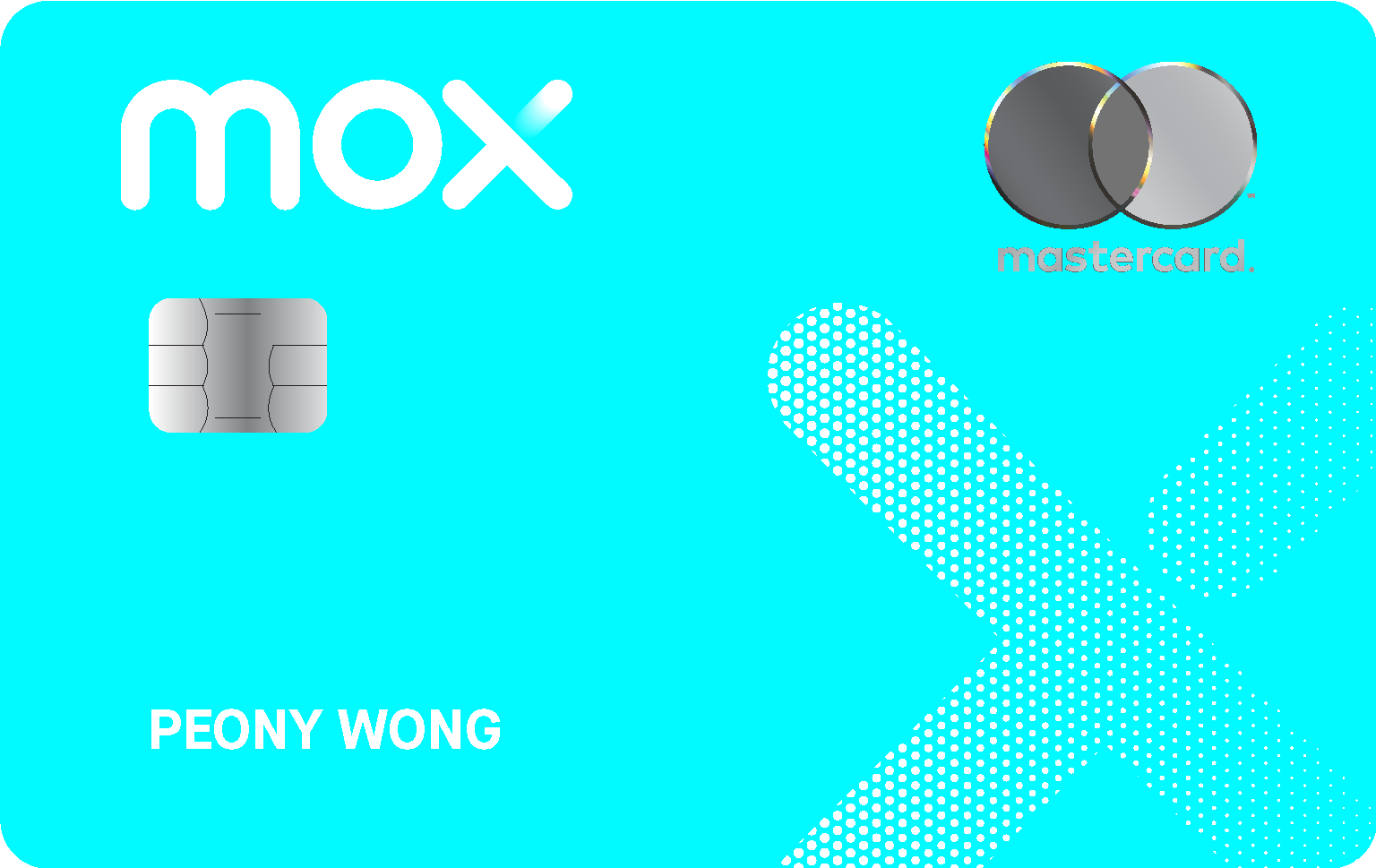
- Unlimited CashBack at major supermarkets
- 3%
- Unlimited CashBack in all categories
- 2%
- Welcome offer
- Up to HKD4,890 rewards
🌟Limited-Time Offer【Spend HK$4,000 to Redeem Rewards Worth Up to HK$3,890 + HK$200 Cashback Upon Card Approval!】
New customers who successfully open a Mox account and apply for a Mox Credit Card via MoneySmart invitation code “2000MOXMS” can first enjoy:
1️⃣ 🏖️Trip.com 8% Hotel Bookings Promo Code + Trip.com HK$100 Flights Promo Code (fulfilled by MoneySmart), plus [⚡️limited-time until 8.03!] HKD200 cash rebate upon card approval (fulfilled by Mox);
2️⃣ Spend HK$4,000 within 60 days of card approval and choose ONE of the following rewards:
・DELSEY SHADOW 5.0 75 CM 4 Double Wheels Expandable Trolley — Suggested Retail Price: HK$3,890
・[🔥NEW!] Marshall Emberton II Portable Bluetooth Speaker — Black & Brass — Suggested Retail Price: HK$1,499
・[🔥NEW!] Apple AirPods 4 — Suggested Retail Price: HK$1,099
・Wellcome HK$1,000 E-Shopping Vouchers
(Fulfilled by Mox; rewards are limited and available on a first-come, first-served basis while stock lasts)
3️⃣ Deposit HKD100,000 or above into your current account within 7 days of account opening, maintain the balance for 60 days or more and have your Mox credit card approved to enjoy 💰 an additional HKD1,000 cash rebate!
*Subject to “2000MOXMS” Invitation Code Promotion Terms and Conditions.
Utilities, Phone & Internet
Utilities are modest by global standards, but summer air conditioning bills catch a lot of first-year expats off guard.
- Basic utilities (electricity, water, gas) for a small-to-medium flat: HK$500–HK$1,500/month, climbing noticeably from June through September when air conditioning runs nonstop through the humidity
- Home internet: roughly HK$150/month for a solid fibre connection
- Mobile plans: prepaid SIMs and unlimited-data monthly plans are both cheap and plentiful, often under HK$150/month for generous data
- Gas/electric deposits: many buildings require a refundable deposit when you set up service — ask your agent to confirm this before move-in day
Healthcare & Insurance for Expats
Hong Kong's public healthcare system is excellent value, but it's built primarily for permanent residents, and wait times for non-urgent public care can be long. Most expats end up using a mix:
- Public healthcare is heavily subsidized and very cheap for residents, but queues for elective or specialist care can stretch for weeks or months.
- Private healthcare is fast and high-quality but priced accordingly — a routine GP visit can run HK$400–HK$800, and specialist consultations or hospital stays climb quickly from there.
- Private health insurance is strongly recommended for expats and typically costs anywhere from a few hundred to a few thousand HK dollars a month depending on age, coverage, and whether it includes maternity or pre-existing conditions.
- Keep an eye on seasonal health costs too — flu season and the occasional black rainstorm signal day (when everything from clinics to gyms may briefly shut) are part of the annual rhythm here.
Taxes
If there's a bright spot in Hong Kong's cost of living story, it's taxes. Hong Kong runs a simple, low-rate system that's one of its biggest draws for professionals relocating from higher-tax countries.
Salaries tax bands (progressive, with generous allowances):
There's also a standard rate cap of 15% on net income (before allowances) that most higher earners end up paying instead, whichever calculation is lower. No capital gains tax, no VAT/sales tax, and no tax on income earned outside Hong Kong for most residents — this is a large part of why take-home pay stretches further here than the sticker-price cost of living might suggest.
U.S. citizens still need to file with the IRS regardless of where they live, so don't let Hong Kong's low local tax rate lull you into skipping that step — talk to a cross-border tax advisor before your first filing season here.
Hong Kong vs Other Cities: How Do We Stack Up?
For anyone comparing offers or relocation packages, here's how Hong Kong's core costs compare with a few reference points expats often ask about:
- Vs. New York or London: Rent in prime Hong Kong districts is comparable to or higher than Manhattan or Central London, but daily costs (transport, casual dining, healthcare) run noticeably lower.
- Vs. Singapore: The two are frequently neck-and-neck for the "most expensive Asian city" title; Hong Kong tends to edge ahead on rent, Singapore on car ownership and dining out.
- Vs. Mainland Chinese cities (Shanghai, Beijing, Guangzhou): Hong Kong is meaningfully pricier across every category — often double the cost of living of Guangzhou — but salaries here tend to be proportionally higher too.
10 Insider Tips to Cut Your Cost of Living in Hong Kong
- Live one MTR stop further out. The rent difference between a "name" neighborhood and the station right next to it can be substantial, with barely any added commute time.
- Get comfortable with cha chaan teng culture. It's not a downgrade — it's some of the best value food in the city.
- Buy produce at wet markets, not supermarkets.
- Never own a car. Let the MTR, trams, and minibuses do the work.
- Time your air conditioning. A programmable thermostat or simply raising the set temperature by 2°C during Hong Kong's brutal summer humidity can meaningfully cut your electricity bill.
- Watch for HK Observatory typhoon signals. A Signal 8 shuts down transport and many businesses — knowing this in advance saves you from wasted taxi fares or cancelled bookings.
- Use your HKID for local discounts once you have one — many museums, cinemas, and retailers offer resident pricing that visitors don't get.
- Take weekend ferries, not flights, for island hopping. Lamma, Cheung Chau, and Lantau are cheap, scenic escapes from compact apartment living.
- Bundle mobile and home internet with the same provider for a discount most expats never ask about.
- Negotiate your rent renewal. Landlords often prefer a reliable tenant at a slightly lower rate over a vacancy — it never hurts to ask before you sign another year.
Frequently Asked Questions
Is Hong Kong expensive to live in?
Yes — Hong Kong regularly ranks among the world's most expensive cities, mainly due to housing costs. Daily expenses like food, transport, and utilities, however, are moderate to cheap by comparison.
How much money do I need to live comfortably in Hong Kong?
A single person typically needs HK$20,000–HK$26,000 a month to live comfortably, including rent. Couples and families should budget proportionally more, especially if international schooling is involved.
What is the average rent for a one-bedroom apartment in Hong Kong?
Expect to pay HK$13,000–HK$18,700 a month for a one-bedroom in a central district, or HK$9,900–HK$13,000 outside the city centre.
Is public transport expensive in Hong Kong?
No — it's one of the most affordable and efficient systems in the world. Most MTR trips cost HK$5–HK$15, and a heavy commuter rarely spends more than HK$500–HK$2,100 a month total.
Do I need a car in Hong Kong?
Almost certainly not. Public transport covers the vast majority of the city, and car ownership costs (parking, insurance, maintenance) are among the highest in the world relative to actual need.
How much does health insurance cost for expats in Hong Kong?
Private health insurance premiums vary widely by age and coverage but commonly range from a few hundred to a few thousand HK dollars a month. It's considered essential given the wait times in the public system.
What is the income tax rate in Hong Kong?
Salaries tax is progressive from 2% to 17%, with a standard rate cap of 15% on net income — among the lowest tax burdens of any major global financial hub.