Hong Kong packs the energy of New York, the skyline of a sci-fi movie, and a 40-minute ferry ride to a beach — and if you're moving here, you've got a lot to figure out fast.
This guide walks you through everything: the visa that actually fits your situation, what your rent will really look like, how taxes work (spoiler: you'll like this part), and the small stuff — SIM cards, Octopus cards, dehumidifiers — that nobody tells you about until you're already sweating through your shirt in July.
[ms-toc]
30-Second Rundown: What You Actually Need to Do
- Sort your visa first. Most professionals use the General Employment Policy (employer-sponsored) or the Top Talent Pass Scheme (no job offer required if you qualify).
- Budget three to four months of rent upfront — deposit, agent fee, and the first month all land at once.
- Apply for your Hong Kong Identity Card (HKID) within 30 days of arrival if you're staying more than 180 days. You'll need it for banking, phone contracts, and most day-to-day admin.
- Hong Kong's tax system is genuinely simple — no sales tax, no capital gains tax, and salaries tax tops out at 17% (or less, depending on your income).
- Public healthcare is heavily subsidized, but most expats carry private insurance for shorter waits and English-speaking doctors.
Is Hong Kong Right for You? A Quick Gut Check
Hong Kong is home to around 7.5 million people packed into 1,100 square kilometers, which makes it one of the most densely populated cities on Earth. That density is exactly why it works so well: everything is close, the trains run every two minutes, and you can get dim sum at 2am if the mood strikes.
It's also one of the most expensive cities in the world for housing, so your monthly budget will look different here than it did back home — even on a solid salary. On the upside, low taxes and zero sales tax claw a fair bit of that back.
Don't judge your cost of living by rent alone. Between low taxes, cheap public transport, and no tipping culture at most local restaurants, Hong Kong's overall cost of living evens out more than the sticker-shock headlines suggest.
Visas and Immigration: Your Ticket In
Unless you hold right of abode, you'll need a visa to work, study, or set up a business in Hong Kong. The Immigration Department runs several schemes, and picking the right one matters — here are the ones expats use most:
Americans and citizens of most Western countries can enter visa-free for up to 90 days as a visitor, which is enough time to scope out neighborhoods and attend interviews — but not enough to legally work. If you're planning to work, your visa needs to be sorted before you take a paycheck.
The Top Talent Pass Scheme has become the go-to route for a lot of remote professionals and senior hires because it doesn't require a job offer. If your income or degree qualifies, it's worth applying for even before you've locked in local employment — it buys you flexibility to job-hunt on the ground.
Getting Your Hong Kong Identity Card (HKID)
If you're staying longer than 180 days, you're required to register for a smart Hong Kong Identity Card within 30 days of arrival. You'll need it constantly — opening a bank account, signing a phone contract, borrowing library books, even some retail loyalty programs ask for it.
Registration happens at any Registration of Persons Office, and it's free for your first card (lost or damaged replacements cost a few thousand Hong Kong dollars). Booking an appointment online ahead of time saves you from standing in a very long line.
Finding a Place to Live: Neighborhoods and Rental Realities
Compact living is part of the Hong Kong deal — even well-paid professionals often live in apartments that would be considered small elsewhere. Where you land usually comes down to budget, commute, and whether you want to be near international schools.
Most rentals come unfurnished, though appliances are typically included. Standard leases run two years with a break clause, and you should budget two to three months' rent for the deposit, plus an agent's fee (often around half a month's rent) and a small government stamp duty on the tenancy agreement.
Buy a dehumidifier the week you move in. Hong Kong's subtropical summers are brutally humid, and mold creeps into closets and shoe racks faster than you'd think. Your future self — and your leather shoes — will thank you.
Money Matters: Banking, Salaries, and Taxes
Opening a Bank Account
You'll generally need your passport, HKID (or proof you've applied for one), and proof of address — like a signed tenancy agreement — to open a local account. Major banks including HSBC, Bank of China (Hong Kong), and Hang Seng all cater to newcomers, and several let you start the application online before you land.
What You'll Earn — and Keep
The statutory minimum wage sits at HK$43.10 per hour, but that figure is largely irrelevant to most professional expats — median monthly earnings run closer to HK$20,000, with finance, tech, and legal roles paying significantly above that.
Here's the part everyone loves: Hong Kong runs a territorial tax system, meaning you're only taxed on income earned in Hong Kong. Salaries tax is charged at progressive rates from 2% up to 17%, but it's capped by a standard rate — so however your income breaks down, you'll never pay more than the standard rate ceiling. There's no sales tax, no capital gains tax, and no tax on dividends.
Key takeaways on tax:
- You file and pay your own salaries tax — it's not automatically deducted from your paycheck like in the U.S.
- Tax bills typically arrive in two installments, usually around January and April.
- In your first year, you may also be asked to prepay a provisional amount for the following year, so budget for a bigger bill upfront.
Getting Around: Octopus Cards and the MTR
An Octopus card is the first thing you should buy after landing — it works on the MTR, buses, trams, ferries, and even at convenience stores and some restaurants. Top it up at any station and you're set for the rest of your stay.
The MTR (Mass Transit Railway) is fast, clean, air-conditioned, and refreshingly punctual. The Island Line covers Hong Kong Island's main expat corridors — Central, Sai Ying Pun, Causeway Bay — while other lines reach Kowloon and the New Territories. Free Wi-Fi is available at most stations, and several also have phone-charging stations if your battery gives out mid-commute.
Healthcare: Public vs. Private
Hong Kong's healthcare system consistently ranks among the best in the world for efficiency. Public hospitals are heavily subsidized and open to anyone with an HKID, but expect longer wait times and no guarantee of an English-speaking doctor.
Most expats carry private health insurance for that reason — it gets you shorter waits, English-speaking specialists, and access to private hospitals, though private care in Hong Kong isn't cheap. Dental work in particular isn't covered by the public system, so factor that into your insurance shopping.
Schools and Education
If you're relocating with kids, start the school search early — competition for international school spots is fierce, and many charge non-refundable application fees just to be considered. Schools following British, American, Australian, and International Baccalaureate curricula are all well represented. Some employers offer school debenture support as part of a relocation package, so it's worth asking before you commit to housing near a specific school.
Setting Up Your Life: SIM Cards, Wi-Fi, and Weather Prep
- Mobile SIM: Pick one up at the airport or any convenience store — pay-as-you-go plans are cheap and require minimal paperwork. Make sure your phone is unlocked before you land.
- Wi-Fi: Free government Wi-Fi hotspots cover much of the city while you wait for home internet to be installed.
- Typhoon season: Roughly May through November. Keep an eye on the Hong Kong Observatory's typhoon signal system — Signal 8 or above means offices and schools close, so it's worth knowing how to check it on your phone.
- OpenRice: The local go-to app for restaurant reviews and menus — far more reliable here than Google Maps reviews alone.
Weekend island-hopping is one of the most underrated parts of living here. Lamma Island, Cheung Chau, and Sai Kung are all under an hour away and feel worlds apart from the Central skyline — a great reset after a fast-paced work week.
Settling In: A Few Honest Culture Notes
Hong Kong's work culture is fast, formal, and hierarchy-conscious, especially in finance and professional services. Business cards get exchanged with both hands, punctuality is taken seriously, and small talk tends to be more reserved than in the U.S. Cantonese is the everyday local language, but English is widely spoken in business, so you can function well without fluency — though picking up a few basic phrases goes a long way with neighbors, taxi drivers, and market vendors.
Best Credit Cards for Expats in Hong Kong

- Cashback on Online Retail Transactions and Local Transportation Transactions
- Up to 8%
- Fee Waiver
- First Year Free
- Minimum Income Requirements
- N/A

- Annual Fee
- First Year Annual Fee Waiver
- Rebate on Overseas Spending & Local Dining
- Unlimited 2%
- Rebate on Local Spending
- Unlimited 1%
⚡【6-Day Flash Offer ✨ Upgraded Gifts or HK$2,200 Cash Voucher! Rewards Worth Up to HK$5,200 +Trip.com Promo Codes! 🎉】
From 1 August to 6 August 2026, new customers who successfully apply for a designated Citi credit card via MoneySmart with eligible spending of HK$4,000 within 30 days after card issuance (approval by 30 September 2026) can receive one of the following rewards:
✈️ 8 x Plaza Premium Lounge APAC 3 hrs Access Pass (Total value: HK$5,200) or
✈️ 4 x Hong Kong Plaza Premium First with Infinity room 3 hrs Access Pass (Total value: HK$4,600) or
🎁 PHILIPS RO Water Dispenser ADD6920/90 (Value: HK$4,288, random color) or
🎁 Dyson Supersonic Nural™ Hair Dryer HD16 (Value: HK$3,990, random color) or
🎁 Medicube Age-R Booster Pro X2 9 in 1 Facial Beauty Device (Value: HK$3,000, random color) or
🎁 Insta360 GO 3S Retro Bundle Special Edition (Value: HK$2,449, random color) or
💳 HK$2,000 Apple Store Gift Card / HK$2,200 ParknShop e-Vouchers
Additional top-up gift options with Citi Credit Card redemption:
🎁 Insta360 Ace Pro 2 Action Camera Dual Battery Version (Standard Bundle) (Value: HK$3,279) — redeem at a discounted price of HK$800
🎁 Philips Baristina Espresso Machine BAR300/00 (Value: HK$5,698) — redeem at a discounted price of HK$1,400
🎁 PHILIPS ADD6922CG Hot and Cold RO Water Dispenser with Auto Ice-Maker (Value: HK$6,488) — redeem at a discounted price of HK$2,000
🎁 Insta360 Luna Ultra Creator Bundle (Value: HK$6,999) — redeem at a discounted price of HK$4,300
+ Trip.com 8% OFF 🏨 Hotel Booking Promo Code + HK$100 Flights ✈️ Promo Code (upon claim submission)!T&Cs applied.
- Unlimited CashBack at major supermarkets
- 3%
- Unlimited CashBack in all categories
- 2%
- Welcome offer
- Up to HKD4,890 rewards
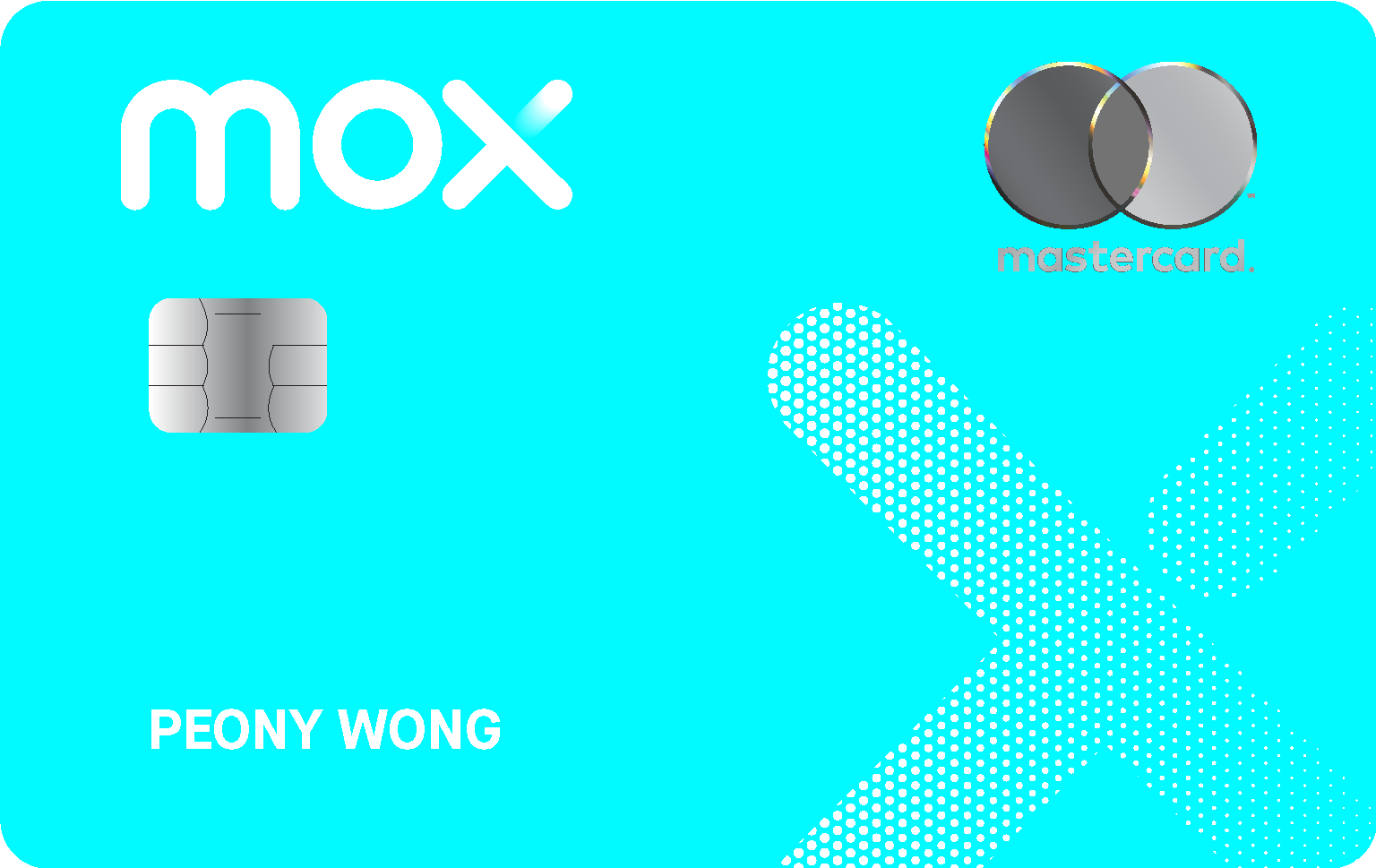
🌟Limited-Time Offer【Spend HK$4,000 to Redeem Rewards Worth Up to HK$3,890 + HK$200 Cashback Upon Card Approval!】
New customers who successfully open a Mox account and apply for a Mox Credit Card via MoneySmart invitation code “2000MOXMS” can first enjoy:
1️⃣ 🏖️Trip.com 8% Hotel Bookings Promo Code + Trip.com HK$100 Flights Promo Code (fulfilled by MoneySmart), plus [⚡️limited-time until 8.03!] HKD200 cash rebate upon card approval (fulfilled by Mox);
2️⃣ Spend HK$4,000 within 60 days of card approval and choose ONE of the following rewards:
・DELSEY SHADOW 5.0 75 CM 4 Double Wheels Expandable Trolley — Suggested Retail Price: HK$3,890
・[🔥NEW!] Marshall Emberton II Portable Bluetooth Speaker — Black & Brass — Suggested Retail Price: HK$1,499
・[🔥NEW!] Apple AirPods 4 — Suggested Retail Price: HK$1,099
・Wellcome HK$1,000 E-Shopping Vouchers
(Fulfilled by Mox; rewards are limited and available on a first-come, first-served basis while stock lasts)
3️⃣ Deposit HKD100,000 or above into your current account within 7 days of account opening, maintain the balance for 60 days or more and have your Mox credit card approved to enjoy 💰 an additional HKD1,000 cash rebate!
*Subject to “2000MOXMS” Invitation Code Promotion Terms and Conditions.
Frequently Asked Questions
Do I need a visa to move to Hong Kong from the U.S.?
Yes, if you plan to work or stay long-term. Americans can enter visa-free for up to 90 days as visitors, but working requires an employer-sponsored visa (like the GEP) or an independent scheme like the Top Talent Pass.
How much does it cost to move to Hong Kong?
Budget for three to four months of rent upfront (deposit plus first month plus agent fees), visa application fees, and initial setup costs like a SIM card and transport card. Housing is the single biggest line item, especially in central neighborhoods.
Is Hong Kong safe for expats?
Yes — Hong Kong consistently ranks as one of the safer major cities globally, with low rates of violent crime. Standard city precautions apply, particularly around personal belongings in crowded areas.
Do I need to speak Cantonese to live in Hong Kong?
Not for daily professional life — English is widely used in business and by most younger residents. That said, basic Cantonese phrases make everyday interactions (markets, taxis, small local restaurants) noticeably smoother.
What's the best neighborhood for a first-time expat?
Mid-Levels and Sai Ying Pun are popular first stops for professionals thanks to their walkability and proximity to Central. Families often lean toward Discovery Bay for its quieter, more suburban feel and international school access.