Get the salary wrong and you're looking at a fine of up to HK$350,000 — get it right and you'll keep the best help in your home for years. This guide walks you through exactly what Hong Kong law requires, what families in your neighborhood are actually paying, and how to budget for the full cost of hiring a domestic helper.
[ms-toc]
The 2026 Minimum Allowable Wage: The Number You Cannot Go Below
Hong Kong doesn't leave helper pay to guesswork. The government sets a Minimum Allowable Wage (MAW) — a legal floor that every employer must meet, full stop.
- Current MAW: HK$5,100 per month, effective for all contracts signed on or after 30 September 2025.
- Food allowance: HK$1,236 per month, required on top of the MAW if you don't provide free meals.
- The MAW is reviewed every year, typically announced in late September, so the number you see today may shift again in 2026.
Here's how the MAW has moved over the past few review cycles:
Whatever the MAW is when your helper's contract is signed locks in for that contract term — it doesn't auto-adjust mid-contract if the rate changes the following September. Mark your contract renewal date in your calendar so you're not accidentally underpaying (or overpaying and not realizing you could hold steady).
Paying Below the Minimum Is a Criminal Offense — Not Just a Bad Look
This is the part first-time employers underestimate. Underpaying a domestic helper in Hong Kong isn't a civil dispute you settle quietly — it's a criminal matter under the Employment Ordinance.
- Employers found guilty of underpayment face fines that can reach HK$350,000, plus possible imprisonment.
- "Fake receipts" — where a helper signs for the full MAW but actually receives less in cash — are illegal and considered wage theft. Helpers can report this to the Labour Department at any time, even after the contract ends.
- Agencies are capped on what they can deduct from a helper's wages for placement fees: no more than 10% of one month's salary, which works out to roughly HK$510 at current rates.
If you're ever unsure whether a private side arrangement is legal, it almost certainly isn't. The Labour Department's Foreign Domestic Helpers' Corner is the definitive source, not a WhatsApp group chat.
What "Salary" Actually Covers — And What You Owe on Top
The MAW is just one line item. Hong Kong law requires employers to also provide, at no cost to the helper:
- Free accommodation in your home, with a reasonable degree of privacy (a partitioned corner of the living room in a Mid-Levels shoebox flat has landed employers in hot water before — this needs to be a genuine, private sleeping space).
- Free food or the HK$1,236 monthly food allowance — you choose one or the other, not a partial mix.
- Free medical treatment for the duration of employment.
- Return airfare to the helper's home country at the end of the contract.
- Mandatory employee compensation insurance, which covers work-related injury.
- At least one rest day every 7 days, plus statutory holidays and paid annual leave.
Add it up, and the real monthly cost of employing a helper runs well above the HK$5,100 sticker figure once you factor in food, insurance premiums, and the amortized cost of airfare and agency fees.
What Families Are Actually Paying in 2026
The MAW is the floor, not the market rate. Plenty of Hong Kong households pay more — sometimes significantly more — to attract and keep an experienced helper.
- Market average: Recent salary surveys put the average domestic helper salary in Hong Kong at roughly HK$5,700 per month, above the legal minimum.
- Elderly care specialists: HK$6,000–HK$9,000, reflecting the extra physical and emotional demands.
- Helpers with driving duties: HK$15,000–HK$20,000, since a driving license and clean local record are genuinely scarce.
Pay also tends to track neighborhood income levels:
- New Territories (Yuen Long, Tuen Mun, Fanling): salaries often sit close to the HK$5,100 floor.
- Mid-range districts (Happy Valley, Kowloon Tong, Sai Kung): typically HK$5,100–HK$7,000.
- Premium districts (The Peak, Repulse Bay, Stanley, Deep Water Bay): HK$5,100–HK$8,500 or more, depending on experience and specialized skills.
If you live in a compact Sai Ying Pun or Mid-Levels apartment and need a helper comfortable with tight quarters, multi-story walk-ups, and a demanding dual-career household schedule, you'll generally need to pay above the local district average to compete for someone experienced. Helpers talk to each other — reputation for fair pay travels fast within the community, especially around Central and Causeway Bay meet-up spots on Sundays.
Do Domestic Helpers Pay Tax in Hong Kong?
Sometimes — it depends on how much they earn.
- Hong Kong's basic tax allowance is HK$132,000 per year, or about HK$11,000 per month.
- A helper earning at or near the MAW generally falls under this threshold and won't owe salaries tax.
- Helpers earning more — for example, those with driving duties or specialized elderly care roles — may cross the threshold and need to file with the Inland Revenue Department.
As the employer, you're not personally liable for your helper's income tax, but it's worth flagging this to helpers earning above the threshold so they're not caught off guard at filing time.
When and How You're Required to Pay
- Salary must be paid monthly, no later than 7 days after the end of the wage period.
- The gap between payments can never exceed one month — you cannot bundle two months' pay into one late lump sum.
- Bank transfer is strongly recommended over cash, since it creates an automatic paper trail. Many employers set up a dedicated local bank account or virtual bank account for their helper to simplify this.
- If paying in cash, both employer and helper should sign a dated receipt each month and keep copies.
How Hong Kong Compares to Singapore and Dubai
If you've lived in more than one of Asia's expat hubs, you'll notice Hong Kong's system is unusually structured:
- Hong Kong: Government-mandated minimum (HK$5,100), plus legally required accommodation, food, and insurance.
- Singapore: No statutory minimum wage — salaries are negotiated (commonly SGD 680–880, roughly HK$4,000–5,200), but employers pay an additional monthly government levy of SGD 300–450 on top.
- Dubai/UAE: No statutory minimum. Live-in salaries range roughly AED 1,500–3,000 (about HK$3,200–6,450), entirely market-driven.
Hong Kong's system gives helpers the strongest legal floor of the three markets — a genuine selling point when you're competing for experienced talent against other expat postings in the region.
Best Credit Cards for Expats in Hong Kong

- Cashback on Online Retail Transactions and Local Transportation Transactions
- Up to 8%
- Fee Waiver
- First Year Free
- Minimum Income Requirements
- N/A

- Annual Fee
- First Year Annual Fee Waiver
- Rebate on Overseas Spending & Local Dining
- Unlimited 2%
- Rebate on Local Spending
- Unlimited 1%
⚡【6-Day Flash Offer ✨ Upgraded Gifts or HK$2,200 Cash Voucher! Rewards Worth Up to HK$5,200 +Trip.com Promo Codes! 🎉】
From 1 August to 6 August 2026, new customers who successfully apply for a designated Citi credit card via MoneySmart with eligible spending of HK$4,000 within 30 days after card issuance (approval by 30 September 2026) can receive one of the following rewards:
✈️ 8 x Plaza Premium Lounge APAC 3 hrs Access Pass (Total value: HK$5,200) or
✈️ 4 x Hong Kong Plaza Premium First with Infinity room 3 hrs Access Pass (Total value: HK$4,600) or
🎁 PHILIPS RO Water Dispenser ADD6920/90 (Value: HK$4,288, random color) or
🎁 Dyson Supersonic Nural™ Hair Dryer HD16 (Value: HK$3,990, random color) or
🎁 Medicube Age-R Booster Pro X2 9 in 1 Facial Beauty Device (Value: HK$3,000, random color) or
🎁 Insta360 GO 3S Retro Bundle Special Edition (Value: HK$2,449, random color) or
💳 HK$2,000 Apple Store Gift Card / HK$2,200 ParknShop e-Vouchers
Additional top-up gift options with Citi Credit Card redemption:
🎁 Insta360 Ace Pro 2 Action Camera Dual Battery Version (Standard Bundle) (Value: HK$3,279) — redeem at a discounted price of HK$800
🎁 Philips Baristina Espresso Machine BAR300/00 (Value: HK$5,698) — redeem at a discounted price of HK$1,400
🎁 PHILIPS ADD6922CG Hot and Cold RO Water Dispenser with Auto Ice-Maker (Value: HK$6,488) — redeem at a discounted price of HK$2,000
🎁 Insta360 Luna Ultra Creator Bundle (Value: HK$6,999) — redeem at a discounted price of HK$4,300
+ Trip.com 8% OFF 🏨 Hotel Booking Promo Code + HK$100 Flights ✈️ Promo Code (upon claim submission)!T&Cs applied.
- Unlimited CashBack at major supermarkets
- 3%
- Unlimited CashBack in all categories
- 2%
- Welcome offer
- Up to HKD4,890 rewards
🌟Limited-Time Offer【Spend HK$4,000 to Redeem Rewards Worth Up to HK$3,890 + HK$200 Cashback Upon Card Approval!】
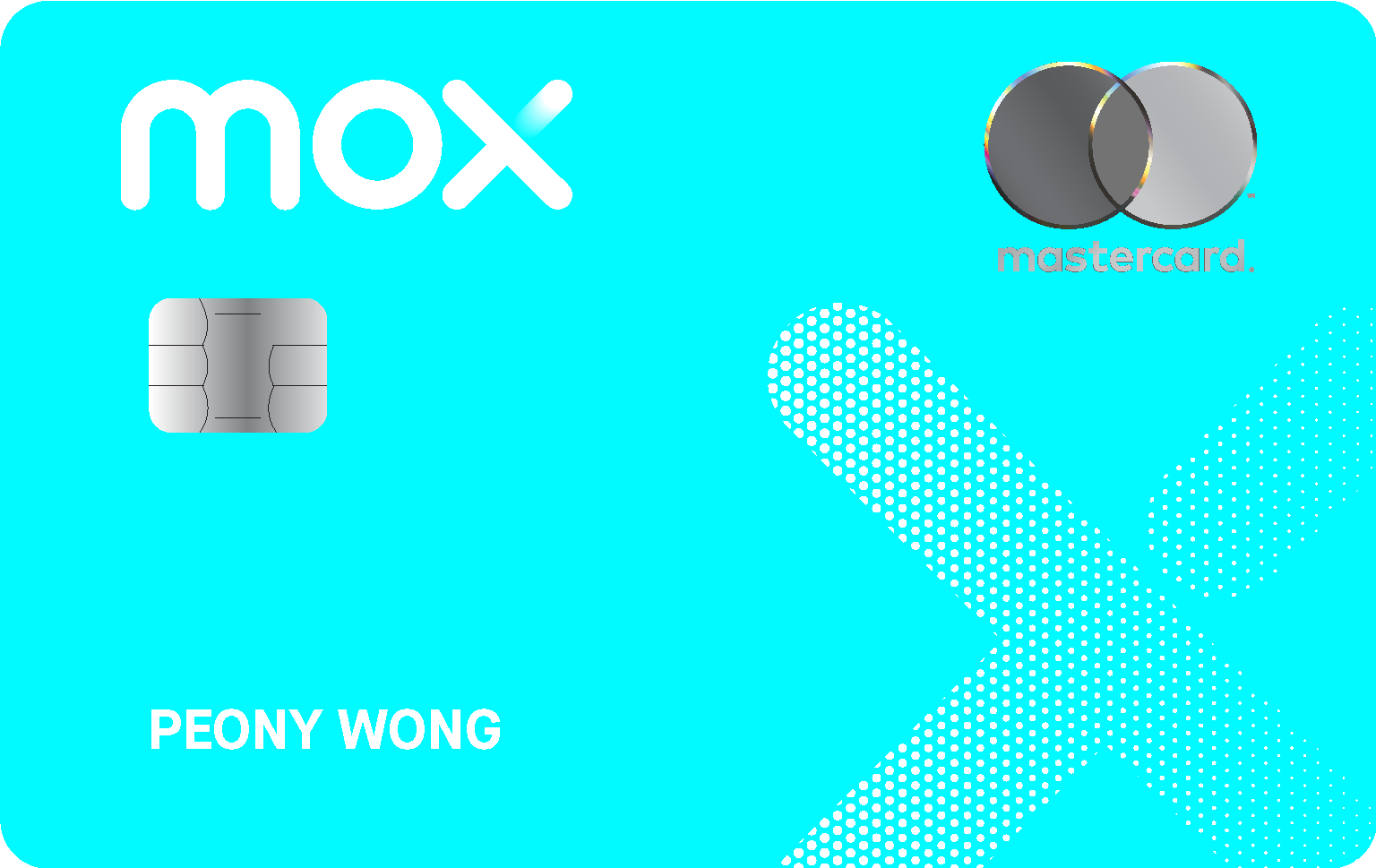
New customers who successfully open a Mox account and apply for a Mox Credit Card via MoneySmart invitation code “2000MOXMS” can first enjoy:
1️⃣ 🏖️Trip.com 8% Hotel Bookings Promo Code + Trip.com HK$100 Flights Promo Code (fulfilled by MoneySmart), plus [⚡️limited-time until 8.03!] HKD200 cash rebate upon card approval (fulfilled by Mox);
2️⃣ Spend HK$4,000 within 60 days of card approval and choose ONE of the following rewards:
・DELSEY SHADOW 5.0 75 CM 4 Double Wheels Expandable Trolley — Suggested Retail Price: HK$3,890
・[🔥NEW!] Marshall Emberton II Portable Bluetooth Speaker — Black & Brass — Suggested Retail Price: HK$1,499
・[🔥NEW!] Apple AirPods 4 — Suggested Retail Price: HK$1,099
・Wellcome HK$1,000 E-Shopping Vouchers
(Fulfilled by Mox; rewards are limited and available on a first-come, first-served basis while stock lasts)
3️⃣ Deposit HKD100,000 or above into your current account within 7 days of account opening, maintain the balance for 60 days or more and have your Mox credit card approved to enjoy 💰 an additional HKD1,000 cash rebate!
*Subject to “2000MOXMS” Invitation Code Promotion Terms and Conditions.
Frequently Asked Questions
What is the minimum salary for a domestic helper in Hong Kong in 2026?
The Minimum Allowable Wage is HK$5,100 per month for contracts signed on or after 30 September 2025. If you don't provide free food, you must also pay a HK$1,236 monthly food allowance.
Can I pay my helper less if we agree to it privately?
No. Paying below the MAW is illegal even with mutual written or verbal agreement. It's treated as a criminal offense, with fines up to HK$350,000 and possible jail time for the employer.
Does the salary change if my helper does driving or elderly care?
The law only sets the minimum — it doesn't mandate higher pay for specialized duties. In practice, though, the market strongly rewards these skills: driving duties commonly command HK$15,000–HK$20,000, and elderly care HK$6,000–HK$9,000.
Do I need to pay my helper during typhoons or Black Rainstorm Signal days?
Yes. A domestic helper is a live-in employee, and their salary isn't reduced for days when a Typhoon Signal No. 8+ or Black Rainstorm Warning keeps everyone — including your helper — safely at home.
What happens to salary and severance if I need to end the contract early?
You'll typically owe wages in lieu of notice, any outstanding annual leave, statutory holiday pay, and possibly a long service or severance payment depending on the length of employment. It's worth using a settlement calculator or consulting your agency before finalizing an early termination.