Thinking of moving to Hong Kong? We asked 20 expats — bankers, teachers, startup founders, stay-at-home parents, and everyone in between — what daily life in Hong Kong is really like. Their answers were refreshingly honest: this city will test your patience, shrink your closet space, and empty your wallet faster than almost anywhere else in Asia. But most of them wouldn't trade it for anything.
[ms-toc]
Quick Takeaways: Life in Hong Kong for Expats
- Cost of living is genuinely high — Hong Kong regularly ranks among the 10 priciest cities on Earth for expats, and rent is the biggest culprit.
- Apartments are small, but location makes up for it — most expats trade square footage for walkability and jaw-dropping transit access.
- The city runs on convenience — the MTR, Octopus card, and 24-hour everything make daily logistics almost frictionless.
- Making local friends takes real effort — most expats say their social circle stays fairly international unless they push past the "expat bubble."
- Weekend life is unbeatable — hiking, beaches, and islands are all within an hour of your front door.
- Career opportunities remain strong, particularly in finance, law, and education, though salaries vary widely by industry.
"The Apartments Are Tiny — and You Get Used to It Faster Than You'd Think"
This was, without question, the single most common comment from the expats we spoke to. Compact living is simply part of the deal in Hong Kong, one of the most densely populated cities on the planet.
- A three-bedroom flat in a sought-after expat pocket like Mid-Levels or Sai Ying Pun typically runs HK$40,000–50,000 per month.
- Head out to Discovery Bay, Kowloon, or the New Territories, and that same budget stretches much further — sometimes for a bigger unit with a sea view.
- Most rentals come unfurnished (though usually with major appliances), and landlords generally expect two to three months' rent as a deposit, plus an agent's fee.
Several expats mentioned that after the initial shock, they adapted by embracing built-in storage, multi-purpose furniture, and — perhaps the biggest mental shift — spending far more time outside the apartment than they ever did back home. When your living room is small but the whole city is basically your backyard, you stop minding as much.
Before signing a year-long lease, rent a short-term serviced apartment for a month first. It's a small extra cost that lets you scope out noise levels, commute times, and whether that "five-minute walk to the MTR" the agent promised is actually five minutes (it rarely is).
"Yes, It's Expensive — But Not in the Ways You'd Expect"
Hong Kong consistently lands in global rankings as one of the most expensive cities for expats to live in, and almost everyone we interviewed agreed — with one caveat: it's expensive in a very specific, lopsided way.
- Rent is the biggest expense by far, easily consuming 30–50% of a typical expat household budget.
- Public transport is shockingly cheap — most MTR rides cost under HK$20, and taxis remain reasonable by international standards.
- Local food is a bargain
- Imported goods and Western dining — wine, cheese, brunch spots — can cost noticeably more than back home.
- Personal income tax is famously low, with a maximum standard rate of 15%, which several expats said single-handedly offset the high rent.
Get an Octopus card the day you land — it works on the MTR, buses, ferries, convenience stores, and even some vending machines. It's the single most useful piece of plastic you'll own in Hong Kong.
"The Transport System Genuinely Spoils You"
If there's one thing every single expat agreed on without hesitation, it's this: Hong Kong's public transport is world-class. The MTR is clean, frequent, air-conditioned, and almost absurdly punctual — several expats admitted they've become "that person" who complains about a two-minute train delay.
- The MTR Island Line connects the expat-heavy stretch from Sheung Wan through Central, Admiralty, and Causeway Bay in minutes.
- Minibuses and trams ("ding dings") fill in the gaps for short hops around Hong Kong Island.
- Ferries to outlying islands like Lamma or Cheung Chau turn a "commute" into a mini day trip.
- The airport is consistently ranked among the world's best, which matters a lot if your job or family has you flying often.
The tradeoff: rush hour on the Island Line can feel like a full-contact sport, and road congestion in Central and Causeway Bay during peak hours is no joke if you're relying on taxis or buses.
"Making Local Friends Takes Real Effort — But It's Worth It"
This is where opinions got the most candid. Many expats admitted that it's easy to live in Hong Kong for years while mostly socializing within an "expat bubble" — international schools, Western bars, and English-speaking colleagues can create a comfortable but somewhat insulated social circle.
- Several expats said local Hongkongers can come across as reserved at first, but described relationships as genuinely warm and loyal once trust is built.
- Joining a hobby-based group — hiking clubs, dragon boat teams, language exchange meetups — was the most commonly cited way of breaking out of the bubble.
- A handful of long-term expats specifically recommended learning at least basic Cantonese, noting that even simple greetings changed how locals responded to them.
Dragon boat teams are an underrated shortcut to a real local social circle — most welcome newcomers of any skill level, and practices are as much about the post-paddle beer as the paddling itself.
"Weekends Feel Like a Reward for Surviving the Week"
If there's a universal love letter in these responses, it's about what happens outside of work hours. Nearly every expat brought up how much easily accessible nature and island-hopping softened the intensity of Hong Kong's famously long working hours.
- Hiking: trails like Dragon's Back, the MacLehose Trail, and Tai Mo Shan are all reachable within an hour of the city center.
- Beaches: Sai Kung and the southern side of Hong Kong Island offer surprisingly clean, uncrowded stretches of sandy beach.
- Outlying islands: Lamma, Cheung Chau, and Peng Chau feel like a different country entirely — car-free, laid-back, and a short ferry ride away.
- Weekend trips abroad: with the airport so close and flight times to the rest of Asia so short, many expats treat destinations like Bangkok or Taipei as casual weekend getaways.
"Work Culture Is Intense — But the Career Upside Is Real"
Long hours came up again and again, especially among expats in finance, law, and consulting. That said, most framed it as a worthwhile tradeoff rather than a dealbreaker.
- Hong Kong remains a genuine regional hub for finance, law, and increasingly tech, which keeps demand for skilled expat talent strong.
- Teaching remains one of the most accessible paths into Hong Kong for expats, particularly through international schools and the Native-speaking English Teacher (NET) Scheme.
- Salaries at the senior level can be very competitive globally, and the low personal tax rate means take-home pay goes further than the headline number suggests.
- On the flip side, more junior roles — especially outside finance — don't always pay as much as expats expect, so it's worth negotiating a full package (housing allowance, schooling, flights home) rather than salary alone.
"The Practical Admin Is Annoying at First, Then Fades Into the Background"
Nearly every expat had a story about their first few weeks — juggling paperwork, figuring out where things are, and feeling like a tourist in their own new home.
- HKID card: anyone staying longer than 180 days needs to register for a Hong Kong Identity Card within 30 days of arrival, and appointment slots at the Registration of Persons Office can book up, so it pays to schedule early.
- Bank accounts: most banks require a signed tenancy agreement as proof of address, so sort out housing before you try to open an account.
- SIM cards: prepaid local SIMs are cheap and widely available at the airport and convenience stores — no need to keep paying international roaming fees.
- Finding your footing with food: apps like OpenRice became a go-to for several expats trying to navigate menus and figure out which hole-in-the-wall spots were actually worth the wait.
Book your HKID appointment online the moment you land — walk-in wait times can stretch into hours, while a scheduled slot usually takes fifteen minutes.
"The Weather Has Two Very Different Personalities"
Almost every expat brought up the climate unprompted, usually with a mix of affection and mild trauma.
- Summer (June–September): hot, sticky, and humid, with temperatures regularly in the 30s°C. This is also typhoon season — checking the Hong Kong Observatory's signal warnings becomes second nature, since a Signal 8 or higher means offices and schools close.
- Autumn (October–December): widely cited as the best stretch of the year — mild, dry, and ideal for hiking.
- Winter (January“February): cooler than most newcomers expect, occasionally dipping below 10°C, and homes without central heating can feel surprisingly cold indoors.
- Spring (March–May): warm and increasingly humid as it edges toward summer.
"Healthcare Is Excellent — If You Know Which System to Use"
Hong Kong's healthcare system consistently earns praise in global rankings, but several expats pointed out that navigating the public vs. private divide takes a bit of learning.
- Public healthcare is heavily subsidized and available to anyone with a valid HKID, but wait times for non-emergency care can be long, and English-speaking doctors aren't guaranteed.
- Private healthcare offers shorter waits and English-fluent doctors, but costs can climb quickly without insurance.
- Most employer packages for expats include private health coverage — worth confirming and understanding fully before you need to use it.
"Would They Do It Again? Overwhelmingly, Yes"
When we asked expats to sum up their experience in one sentence, the responses ranged from "exhausting but exhilarating" to "the best professional decision I ever made." A few who eventually moved back home said they missed the convenience and energy more than almost anywhere else they'd lived. The consensus: Hong Kong isn't an easy city, but it's an addictive one.
Best Credit Cards for Expats in Hong Kong

- Cashback on Online Retail Transactions and Local Transportation Transactions
- Up to 8%
- Fee Waiver
- First Year Free
- Minimum Income Requirements
- N/A

- Annual Fee
- First Year Annual Fee Waiver
- Rebate on Overseas Spending & Local Dining
- Unlimited 2%
- Rebate on Local Spending
- Unlimited 1%
⚡【6-Day Flash Offer ✨ Upgraded Gifts or HK$2,200 Cash Voucher! Rewards Worth Up to HK$5,200 +Trip.com Promo Codes! 🎉】
From 1 August to 6 August 2026, new customers who successfully apply for a designated Citi credit card via MoneySmart with eligible spending of HK$4,000 within 30 days after card issuance (approval by 30 September 2026) can receive one of the following rewards:
✈️ 8 x Plaza Premium Lounge APAC 3 hrs Access Pass (Total value: HK$5,200) or
✈️ 4 x Hong Kong Plaza Premium First with Infinity room 3 hrs Access Pass (Total value: HK$4,600) or
🎁 PHILIPS RO Water Dispenser ADD6920/90 (Value: HK$4,288, random color) or
🎁 Dyson Supersonic Nural™ Hair Dryer HD16 (Value: HK$3,990, random color) or
🎁 Medicube Age-R Booster Pro X2 9 in 1 Facial Beauty Device (Value: HK$3,000, random color) or
🎁 Insta360 GO 3S Retro Bundle Special Edition (Value: HK$2,449, random color) or
💳 HK$2,000 Apple Store Gift Card / HK$2,200 ParknShop e-Vouchers
Additional top-up gift options with Citi Credit Card redemption:
🎁 Insta360 Ace Pro 2 Action Camera Dual Battery Version (Standard Bundle) (Value: HK$3,279) — redeem at a discounted price of HK$800
🎁 Philips Baristina Espresso Machine BAR300/00 (Value: HK$5,698) — redeem at a discounted price of HK$1,400
🎁 PHILIPS ADD6922CG Hot and Cold RO Water Dispenser with Auto Ice-Maker (Value: HK$6,488) — redeem at a discounted price of HK$2,000
🎁 Insta360 Luna Ultra Creator Bundle (Value: HK$6,999) — redeem at a discounted price of HK$4,300
+ Trip.com 8% OFF 🏨 Hotel Booking Promo Code + HK$100 Flights ✈️ Promo Code (upon claim submission)!T&Cs applied.
- Unlimited CashBack at major supermarkets
- 3%
- Unlimited CashBack in all categories
- 2%
- Welcome offer
- Up to HKD4,890 rewards
🌟Limited-Time Offer【Spend HK$4,000 to Redeem Rewards Worth Up to HK$3,890 + HK$200 Cashback Upon Card Approval!】
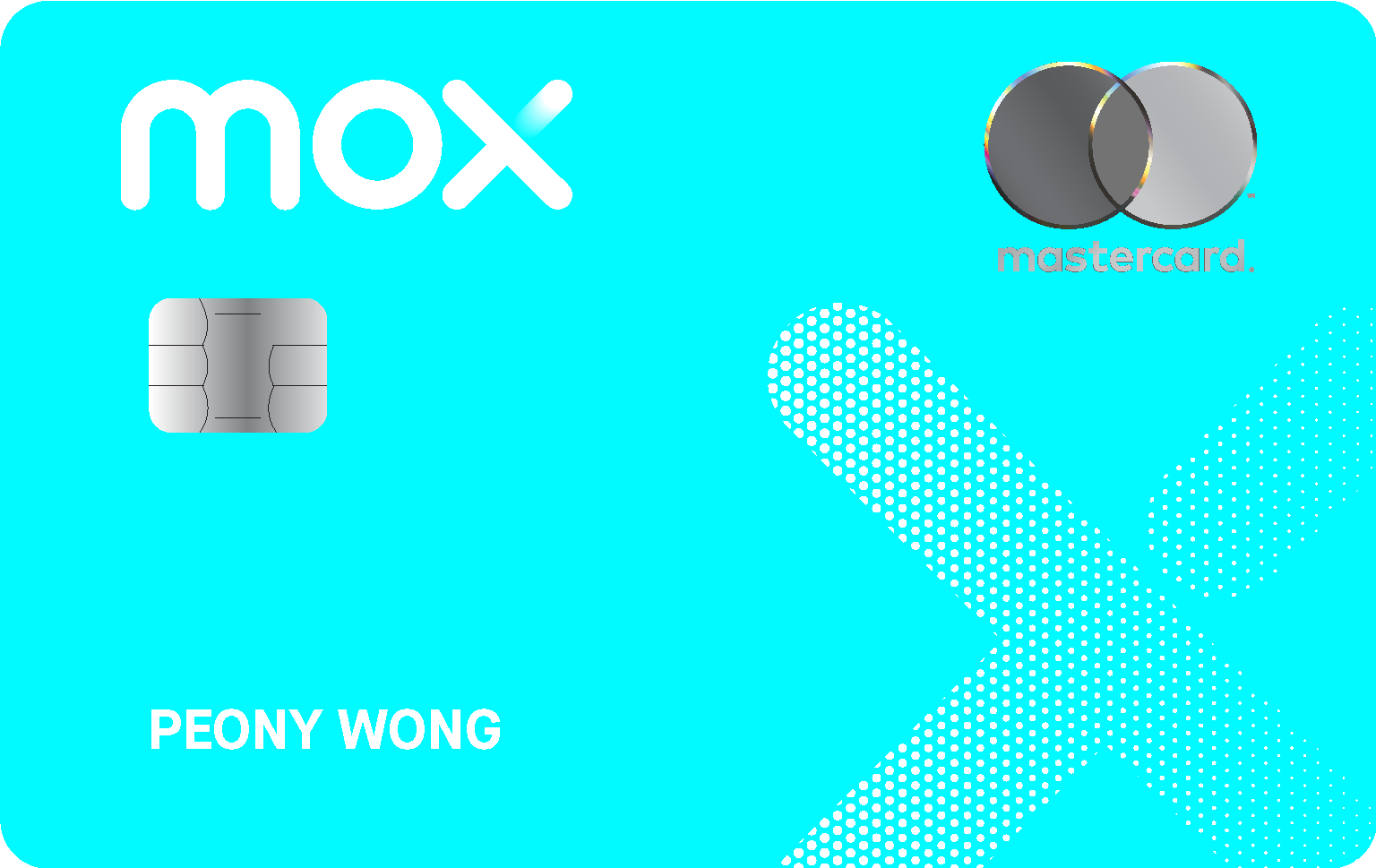
New customers who successfully open a Mox account and apply for a Mox Credit Card via MoneySmart invitation code “2000MOXMS” can first enjoy:
1️⃣ 🏖️Trip.com 8% Hotel Bookings Promo Code + Trip.com HK$100 Flights Promo Code (fulfilled by MoneySmart), plus [⚡️limited-time until 8.03!] HKD200 cash rebate upon card approval (fulfilled by Mox);
2️⃣ Spend HK$4,000 within 60 days of card approval and choose ONE of the following rewards:
・DELSEY SHADOW 5.0 75 CM 4 Double Wheels Expandable Trolley — Suggested Retail Price: HK$3,890
・[🔥NEW!] Marshall Emberton II Portable Bluetooth Speaker — Black & Brass — Suggested Retail Price: HK$1,499
・[🔥NEW!] Apple AirPods 4 — Suggested Retail Price: HK$1,099
・Wellcome HK$1,000 E-Shopping Vouchers
(Fulfilled by Mox; rewards are limited and available on a first-come, first-served basis while stock lasts)
3️⃣ Deposit HKD100,000 or above into your current account within 7 days of account opening, maintain the balance for 60 days or more and have your Mox credit card approved to enjoy 💰 an additional HKD1,000 cash rebate!
*Subject to “2000MOXMS” Invitation Code Promotion Terms and Conditions.
FAQ: Living in Hong Kong as an Expat
Is Hong Kong a good place for expats to live?
For most expats, yes — particularly those in finance, law, education, or tech. The combination of low personal tax, excellent public transport, easy access to nature, and a large existing expat community makes settling in relatively smooth. The main tradeoffs are the high cost of housing and compact living spaces.
How much money do I need to live comfortably in Hong Kong as an expat?
It depends heavily on housing choices, but a single professional renting in a popular expat area should budget for total monthly costs (including rent) well into the HK$30,000–50,000+ range, while a family of four with school fees will need considerably more. Choosing Kowloon or the New Territories over Hong Kong Island can meaningfully lower housing costs.
Do I need to speak Cantonese to live in Hong Kong?
No — English is widely used in business, and many expats get by comfortably without Cantonese. That said, learning a few basic phrases makes day-to-day interactions (markets, taxis, small local shops) noticeably smoother and is genuinely appreciated by locals.
Is Hong Kong safe for expats?
Yes, Hong Kong is generally considered a very safe city with low rates of violent crime compared to many major global cities. As with anywhere, standard precautions apply, and it's worth staying informed about any public safety notices, particularly around severe weather like typhoons.
What is the biggest challenge expats face when moving to Hong Kong?
Housing — both the cost and the adjustment to smaller living spaces — comes up most often. Beyond that, breaking out of the "expat bubble" to build a more locally-rooted social life is the challenge multiple long-term expats say took the most deliberate effort.